

Ultimate Guide to AMP Rear Light Connector: Installation, Wiring, Benefits, and Everything You Need to Know
If you’re troubleshooting dim tail lights, replacing a corroded harness, or upgrading to LED rear lighting on your car, truck, trailer, or motorcycle, the AMP rear light connector is one of the most reliable and widely used solutions in automotive electrical systems. Designed for harsh environments, these weatherproof connectors ensure secure, corrosion-resistant connections between your vehicle’s wiring harness and rear lights (tail, brake, turn signals, and reverse).
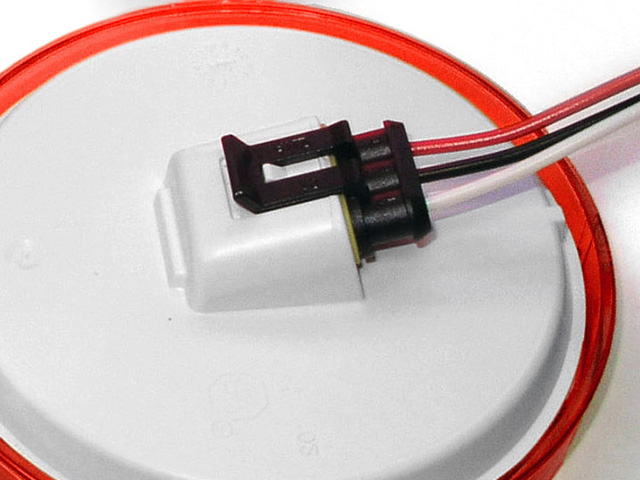
In this comprehensive guide, we’ll cover everything about the AMP rear light connector—from what it is and how it works to step-by-step installation, common pin configurations, compatibility, troubleshooting, and maintenance tips. Whether you’re a DIY enthusiast or a professional mechanic, this post will help you choose, install, and maintain your AMP rear light connector for years of trouble-free performance.
The AMP rear light connector is a multi-pin, sealed electrical plug manufactured by TE Connectivity (formerly AMP Incorporated). These connectors are specifically engineered for vehicle rear lighting circuits, providing a plug-and-play interface between the main wiring harness and tail light assemblies.
Unlike basic bullet or spade connectors, AMP rear light connectors feature:
They are commonly found on heavy-duty trucks, trailers, RVs, motorcycles, and even some passenger vehicles with aftermarket or OEM lighting upgrades. One popular variant is the 3-pin AMP connector used on many round stop/tail/turn lights.
The AMP rear light connector stands out for several practical reasons:
Compared to generic connectors, the AMP rear light connector offers better long-term reliability, especially in environments with constant vibration or exposure to water.
AMP rear light connectors come in various configurations depending on the vehicle and lighting needs. Here’s a quick breakdown:
| Pin Count | Typical Functions | Common Applications |
|---|---|---|
| 2-Pin | Tail + Ground | Marker/clearance lights, simple LED upgrades |
| 3-Pin | Stop/Turn + Tail + Ground | Most popular for round stop/tail/turn lights |
| 4-Pin or 5-Pin | Stop, Turn, Tail, Reverse, Ground | Trucks, SUVs, custom retrofits |
| 7-Pin | Tail, Stop, Turn (L/R), Reverse, Fog, Ground | European trucks, Mercedes, heavy-duty trailers (AMP 7×1.5 style) |
For example, a standard 7-pin AMP rear light connector might follow this pinout (common in commercial vehicles):
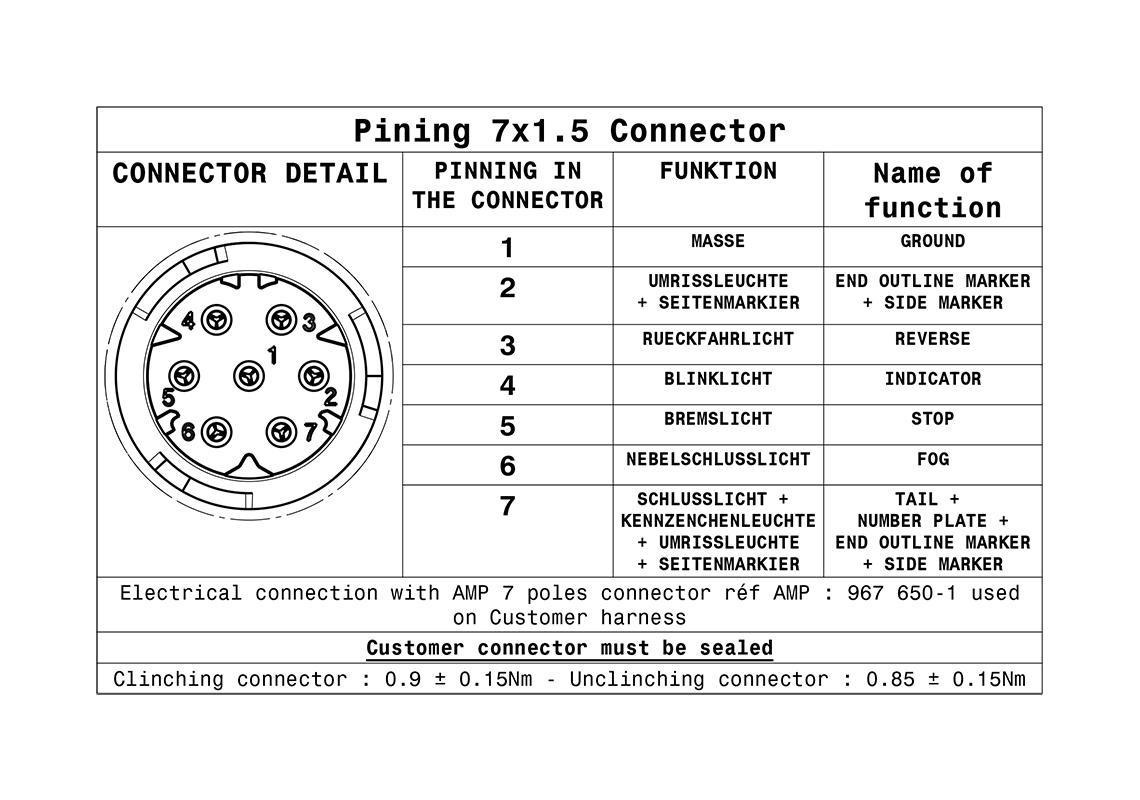
Always check your vehicle’s wiring diagram before swapping connectors.
The AMP rear light connector is used across many platforms:
If you’re towing or upgrading an older vehicle, converting to an AMP rear light connector pigtail is a popular mod.
Installing or replacing an AMP rear light connector is straightforward. Here’s how:
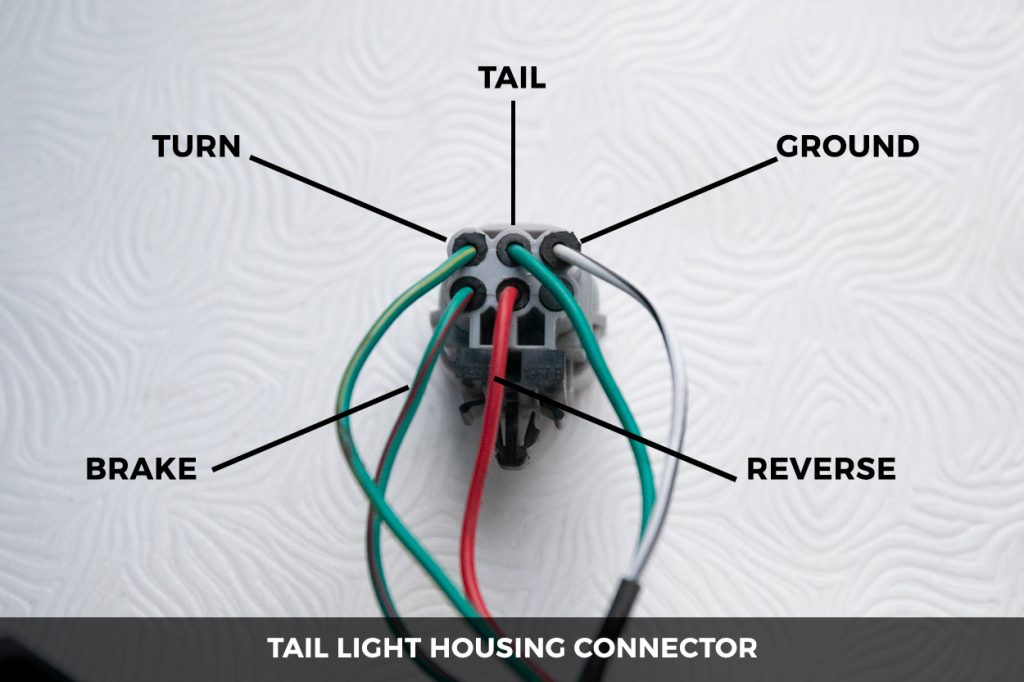
Pro Tip: For LED conversions, ensure your AMP rear light connector supports low-current draw to avoid hyper-flashing.
Most issues are solved by a simple pigtail replacement rather than full harness rewiring.
Look for genuine TE Connectivity or reputable brands like Peterson or Phillips Ind. Online options include eBay pigtail kits, specialty lighting sites, and Amazon. Prices typically range from $5–$25 per connector.
The AMP rear light connector remains a top choice for anyone seeking durable, reliable rear lighting connections. Its weatherproof design, easy installation, and broad compatibility make it perfect for daily drivers, tow rigs, custom builds, and more. Whether you’re fixing a faulty tail light or planning a full lighting overhaul, investing in a quality AMP rear light connector ensures your vehicle stays safe and visible on the road.
Ready to upgrade? Grab your AMP rear light connector pigtail and get those lights shining bright again!
Q: Is the AMP rear light connector compatible with LED lights? A: Yes—most modern versions are fully LED-compatible.
Q: How do I identify the correct pinout for my vehicle? A: Refer to your owner’s manual or test each wire with a multimeter while operating the lights.
Q: Can I use an AMP rear light connector on a trailer? A: Absolutely. Many trailer manufacturers use them for stop/tail/turn functions.
Q: What’s the difference between AMP and other connectors like Deutsch? A: AMP connectors are typically smaller and optimized for lighting circuits, while Deutsch are heavier-duty for higher power.
Only logged in customers who have purchased this product may leave a review.



Reviews
There are no reviews yet.